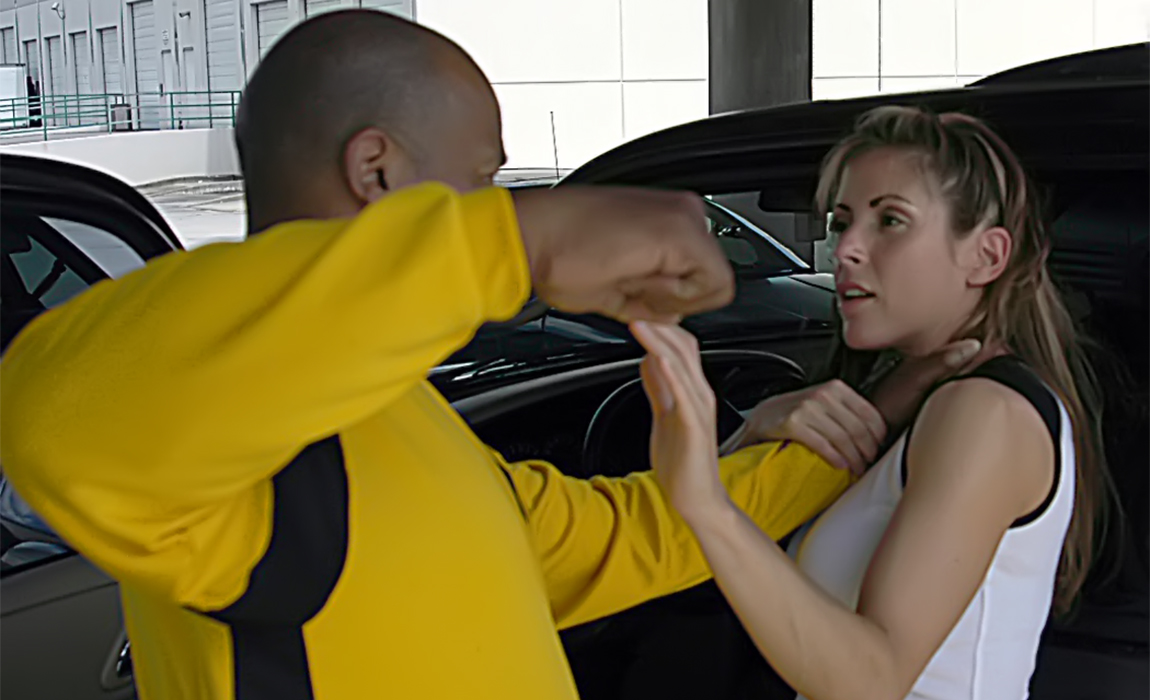
Women's Self-Defense: Essential Safety Guide
Practical strategies and techniques that could save your life, compiled by self-defense expert, Tim Mousel, with over 45 years of experience.
A Complete System for Personal Protection
This comprehensive guide will help you develop awareness, prevention strategies, and defense skills.
Your Complete Safety Resource
Navigate through comprehensive sections designed to build your complete self-defense knowledge
Women's Self-Defense: Essential Safety Guide

By Tim Mousel | Martial Arts Expert & Self-Defense Instructor
With over 45 years of experience training thousands of women
Introduction
Welcome to your comprehensive guide to personal safety and self-defense. Whether you're reading this as a precautionary measure or because of concerns about your safety, you've taken an important first step toward empowerment.
A Note Before We Begin
This guide is designed to help you avoid dangerous situations first and foremost. The physical techniques included are meant as a last resort when avoidance and de-escalation have failed. Remember: the best self-defense is to not be there when trouble happens.
Self-defense isn't just about physical techniques—it's a holistic approach to personal safety that includes:
- Developing awareness of your surroundings
- Recognizing potential threats before they escalate
- Setting strong boundaries through verbal and non-verbal communication
- Understanding the psychology of predatory behavior
- Having a toolkit of physical responses if all else fails
The Purpose of This Guide
This guide aims to provide you with practical knowledge and skills that could one day save your life. It's designed to be comprehensive yet accessible, focusing on techniques and strategies that:
What This Guide Is
- A practical resource with actionable advice
- Based on real-world scenarios and proven techniques
- Designed for women of all ages and physical abilities
- Focused on prevention first, response second
What This Guide Is Not
- A substitute for hands-on training
- A guarantee of safety in all situations
- Intended to promote paranoia or fear
- A complex martial arts system requiring years to master
How to Use This Guide
We recommend reading this guide completely from beginning to end, then returning to specific sections as needed for reference. The information builds progressively, with each section forming part of a complete safety system.
Remember that knowledge alone isn't enough—practice and preparation are key. Consider this guide your first step toward a more secure and confident life.
The Fundamentals of Personal Safety
Personal safety begins with the right mindset. Before diving into specific techniques, it's essential to understand the foundational principles that inform all aspects of self-defense.
The Safety Mindset
A safety mindset isn't about living in fear—it's about living with awareness. It's the balance between paranoia and complacency. Think of it as defensive driving applied to all aspects of life: you're not expecting an accident, but you're prepared for one.
The 3 Components of the Safety Mindset:
- Awareness: Paying attention to your surroundings and the people in them
- Readiness: Being mentally and physically prepared to respond to threats
- Confidence: Projecting an assured presence that discourages predators
What the Safety Mindset Is NOT:
- Constant anxiety or hypervigilance
- Suspicion of everyone you encounter
- Limiting your activities out of fear
- Taking unnecessary risks because of overconfidence
The Awareness Color Code System
Developed by Colonel Jeff Cooper, this system provides a useful framework for different levels of awareness:
| Level | Description | Appropriate When |
|---|---|---|
| White | Completely unaware, distracted | Only when sleeping in a secure location |
| Yellow | Relaxed alertness, general awareness | Your default state in public |
| Orange | Focused alertness on potential threat | When something seems "off" or concerning |
| Red | High alert, ready to take action | When a threat is imminent |
Most people operate in condition White most of the time—completely unaware of their surroundings. This makes them easy targets. Your goal should be to maintain condition Yellow in public: a relaxed but alert state where you're aware of your environment without being paranoid.
Practice Exercise: Condition Yellow
Next time you're in public, practice maintaining Condition Yellow. Notice how many people around you are in Condition White (on phones, headphones in, unaware). Make mental notes of exits, potential barriers, and people's behavior. With practice, this awareness becomes automatic.
Threat Assessment Fundamentals
Understanding how to identify potential threats is a critical skill. Most predators show recognizable behavioral patterns before attacking:
Pre-Incident Indicators
- Target Selection: Watching, following, or testing potential victims
- Closing Distance: Moving closer using pretexts or direct approach
- Interview Process: Asking questions to assess vulnerability
- Positioning: Moving to advantageous locations or isolating targets
- Sudden Behavioral Shifts: Rapid changes in demeanor or approach
The Five Stages of Predatory Behavior
- Information Gathering: Collecting data about potential targets
- Selection: Choosing the most vulnerable target
- Testing: Small boundary violations to gauge response
- Positioning: Creating a favorable attack situation
- Attack: The actual assault
Understanding these patterns allows you to recognize dangerous situations in their early stages, when intervention or escape is easier. The earlier you detect these signs, the more options you have.
The Protective Bubble
Everyone has personal space—a protective bubble around them. In Western cultures, this is typically 3-4 feet for strangers. When someone intentionally enters this space without good reason, it's often the first sign of a potential threat.
"Trust your instincts. If something feels wrong, it probably is. Your subconscious mind processes thousands of subtle cues that your conscious mind might miss."
In the next section, we'll explore how to develop situational awareness—the practical application of these fundamental principles in everyday situations.
Situational Awareness Mastery
Situational awareness is the foundation of all personal safety. It's the practice of actively observing and interpreting your surroundings to identify potential threats before they develop.
Environmental Scanning Techniques
Effective scanning involves systematically observing your environment without appearing paranoid or drawing attention to yourself.
The 3-Step Scanning Process:
- Long-Range Scan: Look at the horizon or as far as you can see within your environment (50+ feet)
- Mid-Range Scan: Observe the space 15-50 feet around you, noting people and environmental features
- Immediate Scan: Be aware of anything within 15 feet that could impact you immediately
The Cooper Color Code in Practice:
- Condition Yellow: While walking, periodically scan ahead, then check your 3, 9, and 6 o'clock positions (right, left, behind)
- Condition Orange: When you notice someone suspicious, track their position and movement patterns without staring
- Mental Rehearsal: As you scan, mentally note escape routes and improvised weapons
Using Reflective Surfaces and Peripheral Vision
Windows, mirrors, and even phone screens can help you observe your surroundings discreetly:
Reflective Surface Techniques
- Use store windows to monitor people behind you while appearing to window shop
- Check your rearview and side mirrors frequently when driving, especially when stopped
- Position yourself near reflective surfaces in public spaces
- Pretend to check your phone while using its black screen as a mirror
Peripheral Vision Training
- Practice noticing movement at the edges of your vision while looking straight ahead
- When walking, keep your chin up and gaze forward while expanding your awareness to both sides
- Avoid tunnel vision, especially when using mobile devices
- Train yourself to notice color, movement, and pattern changes in your peripheral field
Recognizing Common Distraction Tactics
Attackers often use specific tactics to distract potential victims:
| Tactic | How It Works | How to Counter |
|---|---|---|
| The Fake Helper | Offering unwanted assistance with packages, car trouble, etc. | Firmly decline help; maintain distance; move to populated areas |
| The Questioner | Asking for directions, time, or other information to close distance | Answer without stopping; maintain space; keep scanning |
| The Staged Incident | Creating a spectacle or emergency to draw attention | Stay back; observe from a safe distance; call authorities instead of engaging |
| The Accomplice | One person distracts while another approaches from behind | Position yourself with your back to a wall; maintain 360° awareness |
The "Baseline" Concept for Identifying Anomalies
Every environment has a normal pattern of behavior—its baseline. When someone deviates from this pattern, it should trigger increased awareness.
Establishing the Baseline
When entering a new environment, take 30 seconds to observe what's "normal." How are people dressed? How are they moving? What's the energy level? Once you've established this baseline, anomalies—potential threats—will stand out more clearly.
RED FLAGS: Behaviors That Don't Match the Baseline
- Overdressed for the weather or location (may conceal weapons)
- Inappropriate focus on you or others (staring, following)
- Hands hidden in pockets or clothing
- Loitering without apparent purpose
- Moving against the natural flow of foot traffic
- Excessively scanning for cameras or security
- Positioned near entrances/exits with no apparent reason
- Multiple people showing coordinated movements
Situational awareness doesn't mean living in fear. With practice, these scanning techniques become second nature, requiring minimal conscious effort while significantly increasing your safety.
Success Story
"I was walking to my car after work when I noticed a man in the parking garage who didn't seem to belong there. He was overdressed, standing near the stairwell, and seemed to be watching people. Instead of going to my car, I returned to the building and asked security to escort me. They found him hiding between cars with a knife. The situational awareness techniques I learned literally saved my life." — Jennifer K., Dallas
In the next section, we'll explore verbal strategies that can de-escalate potentially violent situations before they require physical intervention.
Verbal De-escalation Strategies
Your voice is one of your most powerful self-defense tools. Effective verbal strategies can often prevent a physical confrontation entirely.
Setting Boundaries with Confident Communication
Clear, confident boundary-setting can stop potential threats before they escalate:
The 3-Step Boundary Setting Process:
-
Name the behavior specifically
Example: "You're standing too close to me" (not "Could you back up please?")
-
State your boundary clearly and directly
Example: "Step back at least six feet" (not "I'd appreciate some space")
-
Provide a consequence (what will happen if they don't comply)
Example: "Step back six feet now, or I'm calling security" (be prepared to follow through)
Important Note
How you say something is as important as what you say. Maintain strong, confident body language that matches your verbal message. Stand tall, maintain eye contact, and use a firm, controlled voice.
Strategic Use of Voice Volume and Tone
Your voice can be modulated in specific ways to achieve different effects:
| Voice Type | How to Use | When to Use |
|---|---|---|
| Low and Slow | Deep, calm, controlled voice with deliberate pacing | Initial de-escalation; shows control and confidence |
| Command Voice | Firm, loud, directed commands with sharp enunciation | When boundaries are crossed; immediate threat |
| Yell | Maximum volume, high-pitched, attention-grabbing | When attack is imminent; to attract witnesses |
Voice Training Exercise
Practice all three voice types at home. For the command voice, stand with feet shoulder-width apart, take a deep breath into your diaphragm, and project from your core, not your throat. Practice phrases like "STOP RIGHT THERE" and "BACK UP NOW."
Phrases That Can Diffuse Confrontations
Effective Verbal Responses
- "I don't know you, and I don't want to talk to you." (Creates a clear boundary)
- "This conversation is over. Leave me alone now." (Definitive closing statement)
- "Step back. You're too close." (Direct command with specific behavior)
- "I've called 911. The police are on their way." (Even if you haven't, this can deter many threats)
Phrases to Avoid
- "Please leave me alone." (Sounds uncertain; shows vulnerability)
- "I'm sorry, but..." (Never apologize to a potential threat)
- "I have a boyfriend/husband." (Irrelevant to your right to be left alone)
- "I don't want any trouble." (Signals fear and submission)
Creating Witnesses and Allies in Public Situations
Predators prefer isolation. Bringing attention to a situation often stops an attack:
Witness Creation Tactics:
- Make eye contact with others nearby, then look at the threat (creates shared awareness)
- Directly ask specific people for help: "You in the red shirt, I need help right now!"
- Use attention-grabbing phrases: "FIRE!" often works better than "Help!"
- Call someone on your phone and loudly describe your location and the person threatening you
The Bystander Effect and How to Counter It:
The bystander effect occurs when people don't help because they assume someone else will. Counter it by:
- Making direct eye contact with specific individuals
- Giving specific instructions: "You call 911!" not "Someone help!"
- Creating a sense of urgency: "I need help RIGHT NOW!"
The Broken Record Technique
When someone is persistent, simply repeat your boundary statement without engaging in their attempts to draw you into debate or explanation:
Example Scenario:
Aggressor: "Hey, I just want to talk to you for a minute."
You: "I'm not interested. Leave me alone."
Aggressor: "Don't be like that. I'm just being friendly."
You: "I'm not interested. Leave me alone."
Aggressor: "Why are you being so rude? I just want to talk."
You: "I'm not interested. Leave me alone."
Notice how you don't engage with their arguments or justifications. You simply repeat your boundary statement until they give up or you can safely leave the situation.
Remember that verbal de-escalation should be your first response to a potential threat. Physical techniques should only be employed when verbal strategies fail or aren't appropriate for the situation.
Success Story
"A man started following me through a parking garage. Instead of showing fear, I turned, made direct eye contact, and in my loudest voice said 'STOP FOLLOWING ME NOW!' He was so shocked by my confidence and volume that he immediately turned and walked away. The verbal techniques in this course gave me the confidence to handle the situation before it became dangerous." — Maria T., Chicago
In the next section, we'll cover essential physical defense techniques for situations where verbal de-escalation isn't enough.
Essential Physical Defense Techniques
When prevention and verbal strategies fail, physical techniques become necessary. This section covers essential moves that require minimal strength but provide maximum effectiveness.
Important Disclaimer
Reading about physical techniques is not the same as practicing them. These descriptions are meant as a supplement to hands-on training, not a replacement. We strongly recommend attending a self-defense class to properly learn these movements. Check our class schedule here.
The Vital Targets That Require Minimal Strength
Rather than trying to overpower an attacker, focus on these vulnerable targets:
Primary Targets
-
Eyes
Extremely sensitive and will cause pain, disorientation, and temporary blindness when struck.
-
Throat
Vulnerable to even light strikes; can disrupt breathing and cause significant pain.
-
Groin
Causes extreme pain and can temporarily incapacitate an attacker.
-
Knees
Only bend one way; vulnerable to kicks from the side; can limit mobility.
Secondary Targets
-
Nose
Very sensitive; can cause tearing and disorientation when struck.
-
Ears
Cupping and slapping both ears simultaneously can cause disorientation.
-
Shins
Nerves close to the surface; painful when struck with a scraping kick down the shin.
-
Fingers
Bending individual fingers backward can break an attacker's grip.
Proper Defensive Stance and Positioning
A solid foundation is crucial for effective self-defense:

The Ready Stance:
- Position your feet shoulder-width apart, with your dominant foot slightly back
- Bend your knees slightly for balance and stability
- Keep your weight on the balls of your feet, not your heels
- Bring your hands up to protect your face, palms open
- Tuck your chin slightly to protect your throat
Breaking the Most Common Grabs and Holds
Wrist Grab Escape
- Rotate your grabbed hand so your thumb is aligned with the attacker's thumb (the weakest part of their grip)
- Make a fist with your grabbed hand to strengthen your wrist
- Pull sharply toward your hip while rotating your arm
- Immediately follow with a strike or create distance
Remember: Always move your body in the direction of the escape, not just your arm. Use your whole body's weight and momentum.
Bear Hug Escape (from behind)
- Drop your weight by bending your knees, lowering your center of gravity
- Create space by using your elbows to strike the attacker's midsection
- Step to the outside of their foot and turn your hips
- Strike vulnerable targets (groin, eyes, throat) as you escape
Key principle: In most holds, there is at least one direction of movement that is less restricted. Find that direction and move explosively that way first.
Escape Techniques When Pinned or Restrained
Ground Defense: The Bridge and Roll
If pinned on your back with an attacker on top of you:
- Create space by framing your arms against their hips or chest
- Plant your feet flat on the ground
- Bridge your hips upward explosively while pushing with your arms
- Turn toward one side, using the momentum to roll the attacker off
- Immediately get to your feet and create distance
Using Everyday Items for Self-Defense
Common items can become effective improvised weapons:
| Item | How to Use | Target Areas |
|---|---|---|
| Keys | Hold between fingers, extending from fist | Eyes, face, throat |
| Pen/Pencil | Grip firmly, use for direct strikes | Neck, eyes, ribs |
| Bag/Purse | Swing by strap or use as shield | Head, face, knees |
| Cell Phone | Grip firmly, strike with corner | Eyes, throat, temples |
The FEAR Response: When Physical Defense Is Necessary
If you must fight back, remember the FEAR principle:
- F - Focus on vulnerable targets
- E - Explode with sudden, explosive movements
- A - Attack multiple targets in rapid succession
- R - Retreat as soon as possible to safety
Remember that fighting should always be your last resort. The goal of physical self-defense is not to defeat an attacker, but to create enough space and time to escape safely.
Success Story
"A man grabbed my wrist in a parking lot and tried to pull me toward his car. I used the wrist escape technique I learned in this course—rotating toward his thumb and pulling sharply toward my hip. It broke his grip immediately, and I was able to run to safety and call the police. The technique was so simple, but it worked perfectly under pressure." — Rebecca M., Houston
In the next section, we'll explore environment-specific safety protocols for various situations, from home to public transportation.
Environment-Specific Safety Protocols
Different environments present unique safety challenges. This section provides tailored strategies for common locations and situations.
Home Security Essentials
Your home should be your sanctuary. Take these steps to secure it effectively:
Physical Security Measures
- Install solid core exterior doors with deadbolt locks
- Reinforce door frames with 3-inch screws in strike plates
- Use window locks or security bars on ground-floor windows
- Install motion-activated exterior lighting
- Maintain landscaping to eliminate hiding spots near windows and doors
- Consider a security system or doorbell camera
Behavioral Security Practices
- Always lock doors and windows, even when home
- Never open the door without verifying who's there
- Draw curtains at night to prevent others from seeing in
- Don't hide spare keys outside (leave with trusted neighbor instead)
- Vary your routine to be less predictable
- Keep a charged phone accessible at night
Safe Room Concept
Designate one room in your home as a "safe room" with stronger security features: solid core door, reinforced hinges, additional lock, charged phone, and emergency supplies. In a home invasion, retreat to this room while calling for help.
Parking Lot and Garage Safety
Parking areas are common locations for assaults due to their isolated nature:
Before Arriving:
- Choose well-lit parking areas near entrances
- Have keys ready before leaving the building
- Check the backseat before approaching your car
- Consider calling security for an escort if available
Approaching Your Vehicle:
- Scan the area around your car before approaching
- Walk purposefully with head up and alert posture
- Check under your car as you approach
- Lock doors immediately upon entering your vehicle
Carjacking Prevention
If someone attempts to carjack you, remember that your vehicle is replaceable—you are not. If threatened with a weapon, surrender the car. If approached while stopped at a light, try to drive away if safe to do so; otherwise, honk continuously to draw attention.
Public Transportation Protection Strategies
| Transit Type | Key Safety Strategies | Red Flags to Watch For |
|---|---|---|
| Bus |
|
|
| Train/Subway |
|
|
Rideshare and Taxi Precautions
When using rideshare services like Uber or Lyft:
Before Getting In:
- Verify the license plate, car make/model, and driver photo
- Ask "Who are you here for?" instead of "Are you here for [your name]?"
- Wait indoors until the car arrives
- Share your trip details with a trusted contact
During the Ride:
- Sit in the back seat on the passenger side
- Keep your phone out and visible
- Follow the route on your own map app
- Trust your instincts—if something feels wrong, ask to be let out in a safe, populated area
Nightlife and Social Venue Awareness
Rules for Safer Socializing:
- Never leave drinks unattended; get a new one if you do
- Use the buddy system—arrive and leave together
- Maintain awareness of exits and safe areas
- Let someone know where you're going and when you'll return
- Maintain control of your faculties; limit alcohol consumption
- Be wary of new acquaintances who are overly pushy or attentive
- Trust your instincts about uncomfortable situations
- Avoid becoming isolated with people you've just met
Success Story
"After taking your course, I completely changed how I approached parking garages. One night, I noticed someone loitering between cars. Instead of heading to my vehicle, I returned to the building and asked security to escort me. They found a man with a knife hiding near my car. Your environmental awareness strategies literally saved my life." — Karen L., Denver
In the next section, we'll explore how technology can enhance your personal safety through apps, devices, and digital strategies.
Digital Safety Connection
Technology can be a powerful ally in your personal safety toolkit. This section covers how to leverage digital tools effectively.
Using Technology for Personal Safety
Your smartphone and other devices can provide additional layers of protection:
Smartphone Emergency Features
iPhone Emergency SOS:
- Press and hold side button + either volume button
- Drag the Emergency SOS slider
- Phone will call emergency services and notify emergency contacts
Android Emergency Features:
- Press power button 5 times quickly (may vary by model)
- Use Emergency mode in settings
- Setup varies by manufacturer; check your specific model
Setting Up Emergency Contacts
For iPhone:
- Open the Health app, tap your profile picture
- Tap Medical ID, then Edit
- Add emergency contacts under Emergency Contacts
For Android:
- Go to Settings > Safety & emergency
- Tap Emergency contacts
- Add contacts from your contact list
Recommended Safety Apps and Devices
| Type | Recommendations | Key Features |
|---|---|---|
| Safety Apps |
|
|
| Personal Alarm Devices |
|
|
| GPS Tracking Devices |
|
|
Important Note About GPS Trackers
Be aware that GPS tracking devices can also be misused by others. Periodically check your personal items and vehicle for unauthorized tracking devices, especially if you suspect someone may be stalking you.
Location Sharing Best Practices
Sharing your location with trusted contacts can enhance your safety:
Setting Up Location Sharing:
iPhone:
- Open Messages and select a contact
- Tap their name, then "Share My Location"
- Choose duration (one hour, until end of day, or indefinitely)
Android:
- Open Google Maps, tap your profile picture
- Tap "Location sharing"
- Choose a contact and set duration
Location Sharing Safety Rules:
- Only share with trusted family members or close friends
- Use temporary sharing for dates or meeting new people
- Establish check-in procedures with your trusted circle
- Periodically review who has access to your location
- Create a code word to alert contacts to danger without alerting a potential threat
Social Media Safety Considerations
What you share online can impact your physical safety:
Information to Keep Private
- Your home address and specific neighborhood
- Daily routines and regular schedules
- Vacation plans before or during your trip
- Photos that reveal your home's layout or security features
- Photos with geolocation data enabled
- Check-ins at locations while you're still there
Social Media Security Settings
- Review privacy settings on all platforms monthly
- Use two-factor authentication on all accounts
- Disable location tagging on photos
- Limit friend/follower acceptance to people you know
- Consider using a pseudonym for public interactions
- Regularly search yourself online to see what information is public
Digital Boundaries for Privacy Protection
Establishing digital boundaries is as important as physical ones:
Digital Privacy Checklist
- Use strong, unique passwords for all accounts (consider a password manager)
- Regularly review app permissions on your devices
- Be cautious about who has physical access to your devices
- Check your devices for tracking apps or spyware if you suspect monitoring
- Consider using a VPN for sensitive online activities
Success Story
"I was walking alone one night when a man started following me. I activated the safety feature on my phone app which immediately started broadcasting my location to my emergency contacts. My brother called me right away, and I was able to say a code phrase we had established. He called the police while staying on the phone with me, and they arrived within minutes. The digital safety strategies from this guide made all the difference." — Amy B., Chicago
In the next section, we'll explore what to do after an incident occurs, including physical, emotional, and legal considerations.
Post-Incident Response
Knowing what to do after a threatening encounter or attack is crucial for your physical and emotional recovery, as well as for potential legal proceedings.
First Actions After an Incident
The immediate moments after an incident are critical:
Immediate Response Checklist:
-
Get to safety
Move to a secure location away from the threat. This might be a public place, police station, hospital, or friend's home.
-
Call emergency services (911)
Even if you're not injured, report the incident immediately while details are fresh.
-
Seek medical attention
Even if injuries seem minor, get checked by medical professionals. Some injuries may not be immediately apparent.
-
Contact a trusted person
Have someone you trust come to be with you for support and as a witness to your immediate condition.
-
Preserve evidence
Don't shower, change clothes, or clean up until evidence has been collected. If possible, take photos of any injuries or damage.
Important Medical Note
After a physical altercation, adrenaline can mask pain and injuries. Even if you feel fine, get checked by medical professionals. Internal injuries, concussions, and other serious conditions may not present immediate symptoms.
Documentation and Reporting
Thorough documentation can be crucial for legal proceedings and your own healing process:
What to Document
- Detailed written account of the incident while memory is fresh
- Photos of any injuries (continue documentation as bruises develop)
- Names and contact information of any witnesses
- Location, date, and time of the incident
- Description of the attacker (height, weight, clothing, distinguishing features)
- Any communication related to the incident (texts, emails, voicemails)
Filing a Police Report
- Request a female officer if that makes you more comfortable
- Bring a trusted person for support
- Ask for a copy of the police report and incident number
- Be as specific and detailed as possible
- If you remember additional details later, contact the investigating officer to update your report
- Ask about victim services or advocates available through the police department
Physical and Emotional Self-Care
Recovery involves both physical and psychological healing:
Physical Recovery:
- Follow all medical advice and treatment plans
- Get adequate rest to allow your body to heal
- Maintain nutrition and hydration
- Gradually return to physical activity as advised by medical professionals
- Be patient with your body's healing process
Emotional Recovery:
- Recognize that emotional reactions are normal (fear, anger, anxiety, numbness)
- Consider professional counseling or therapy
- Connect with support groups for survivors
- Practice self-compassion and patience
- Establish routines that help you feel safe and in control
Symptoms of Trauma to Watch For
It's normal to experience psychological effects after a traumatic event. Seek professional help if you experience:
- Persistent nightmares or flashbacks
- Severe anxiety or panic attacks
- Depression or withdrawal from activities you used to enjoy
- Difficulty concentrating or making decisions
- Hypervigilance or exaggerated startle response
- Changes in sleeping or eating patterns
Legal Considerations and Resources
| Legal Resource | What They Provide | How to Access |
|---|---|---|
| Victim Advocates |
|
Through police departments, district attorney offices, or organizations like RAINN |
| Restraining Orders |
|
Local courthouse or through victim services; emergency orders available through police |
| Legal Aid |
|
Legal Aid Society, local bar association, or women's shelters |
Building Resilience After an Incident
Recovery is a journey that can ultimately lead to greater strength:
Strategies for Building Resilience:
- Reconnect with your support network of family and friends
- Consider additional self-defense or safety training
- Practice stress-reduction techniques (meditation, deep breathing)
- Focus on activities that give you a sense of control and competence
- Gradually re-engage with activities or places that trigger anxiety
- Join a support group to connect with others who understand
- Consider ways to transform your experience into positive action
- Be patient with yourself—healing is not linear
Recovery Success Story
"After my assault, I thought I'd never feel normal again. I followed the post-incident guidelines in this course, getting immediate medical attention and counseling. I documented everything and worked with a victim advocate through the court process. Three years later, I'm not just surviving—I'm thriving. I now volunteer as a self-defense instructor and help other women find their strength. Recovery is possible." — Michelle T., Atlanta
In the next section, we'll explore special situations that require specific safety approaches, from travel safety to protecting children.
Special Situations Guide
Certain environments and situations require specific safety approaches. This section provides targeted strategies for common special circumstances.
Travel Safety Protocols
Whether traveling domestically or internationally, being away from familiar environments requires heightened awareness:
Before You Go
- Research your destination (local customs, dangerous areas, emergency services)
- Share your itinerary with trusted contacts
- Make copies of important documents (passport, ID, insurance)
- Set up international calling on your phone
- Register with the State Department's Smart Traveler Enrollment Program (STEP) for international travel
- Learn a few key phrases in the local language if traveling internationally
During Your Trip
- Use hotel safes for valuables
- Avoid displaying wealth or expensive equipment
- Use official transportation services
- Be extra cautious in tourist areas (prime targets for criminals)
- Establish regular check-ins with people at home
- Trust your instincts about uncomfortable situations or people
Hotel Room Safety
- Request rooms between the 3rd and 6th floors (high enough from ground access but reachable by fire equipment)
- Use all additional locks and security devices provided
- Check the entire room upon entering (including behind curtains, under beds, in closets)
- Never open your door without verifying who's there (use peephole)
- Consider bringing a portable door alarm or doorstop alarm for extra security
Campus and Workplace Safety Strategies
Campus Safety
- Know the location of emergency phones and safe zones
- Use campus escort services when walking at night
- Download the campus safety app if available
- Attend orientations about campus safety resources
- Be cautious at parties and social events
- Form a buddy system with trusted classmates
Workplace Safety
- Familiarize yourself with your company's security protocols
- Know the emergency exits and evacuation procedures
- Park in well-lit areas close to entrances if working late
- Request security escorts to your car after hours
- Keep personal information private from clients or customers
- Report concerning behavior from coworkers or clients
Dating and Relationship Safety
Dating situations require specific safety considerations:
Dating Safety Protocols:
First Dates and New Relationships:
- Meet in public places for the first few dates
- Arrange your own transportation
- Tell someone you trust where you're going and when you'll return
- Use a "safety call" system with a friend
- Trust your instincts about red flags
Online Dating Safety:
- Use reputable dating platforms
- Keep conversations on the platform until you're comfortable
- Research the person before meeting (social media, web search)
- Video chat before meeting in person
- Avoid sharing personal details early (address, workplace, etc.)
Relationship Red Flags
Be alert to these warning signs in relationships:
- Excessive jealousy or possessiveness
- Isolating you from friends and family
- Moving too quickly in the relationship
- Controlling behavior or constant monitoring
- Refusing to respect boundaries
- Pressuring you to drink/use substances
Protecting Children and Teaching Them Awareness
Age-Appropriate Safety Education
For Young Children (3-7):
- Teach the proper names for body parts
- Explain "private parts" and body boundaries
- Introduce the concept of "safe" and "unsafe" touches
- Identify trusted adults they can talk to
For Older Children (8-12):
- Develop basic situational awareness skills
- Teach how to identify and respond to concerning behavior
- Role-play responses to uncomfortable situations
- Establish clear communication channels about safety concerns
For Teens (13-17)
-
Digital safety education
Include online predator awareness, privacy settings, and sharing limits
-
Dating safety and consent
Discuss healthy relationships, pressure recognition, and setting boundaries
-
Party safety strategies
Include buddy systems, drink safety, and exit strategies
-
Basic self-defense techniques
Consider enrolling them in an age-appropriate self-defense class
The Safety vs. Fear Balance
When teaching children about safety, balance is key. Focus on empowerment rather than fear. Emphasize that most people are good, but they need skills to recognize and respond to the rare dangerous situation. Build confidence alongside caution.
Group Safety Strategies for Friends and Family
Creating safety systems with your close circle enhances everyone's protection:
Creating a Safety Network:
Code Words and Phrases:
- Establish a code word that signals "I need help" without alerting others
- Create a phrase for phone calls that means "Call the police"
- Have a casual-sounding text message that alerts friends to danger
- Practice using these codes so responses become automatic
Check-in Systems:
- Establish regular check-ins during separate activities
- Create a group chat for real-time location updates
- Agree on actions to take if someone misses a check-in
- Consider using apps designed for group safety monitoring
Success Story
"My college roommates and I established a code word system after taking this course together. Just two months later, I used our code word in a text when I felt uncomfortable on a date. My roommate called with our pre-planned 'emergency' that required me to leave immediately. The date had become increasingly pushy and inappropriate, and the system worked perfectly to extract me from the situation before it escalated." — Taylor S., Boston
In the final section, we'll explore how to continue your self-defense education and build a comprehensive personal safety practice.
Training Path & Next Steps
This guide is just the beginning of your self-defense journey. This final section explores how to continue developing your skills and building your personal safety practice.
How to Continue Your Self-Defense Education
Building on the foundation provided in this guide:
Formal Training Options
Self-Defense Workshops:
- Intensive 1-4 hour sessions focused on practical skills
- Great introduction to physical techniques
- Often offered by martial arts schools, community centers, or police departments
- Check our upcoming workshops
Martial Arts Training:
- Progressive skill development over time
- Regular practice builds muscle memory
- Consider styles focusing on practical self-defense (Jeet Kune DO, Krav Maga, Brazilian Jiu-Jitsu, Muay Thai)
- Provides fitness benefits alongside self-defense
Self-Directed Learning
Books and Resources:
- "The Gift of Fear" by Gavin de Becker
- "Facing Violence" by Rory Miller
- "Meditations on Violence" by Rory Miller
- "Beauty Bites Beast" by Ellen Snortland
Online Learning:
- Reputable self-defense YouTube channels
- Virtual training programs with live feedback
- Self-defense podcasts and webinars
- Online communities for women's safety
Practice Recommendations for Skill Retention
Knowledge becomes useful only through consistent practice:
Effective Practice Schedule
Daily Practice (5-10 minutes):
- Mental rehearsal of awareness patterns
- Stance and movement fundamentals
- Verbal boundary setting practice
Weekly Practice (30 minutes):
- Physical techniques with a partner
- Scenario-based response drills
- Review and refine escape techniques
Practice Methods:
Solo Practice:
- Shadow practice of strikes and defensive movements
- Visualize scenarios and mentally rehearse responses
- Practice your command voice when alone
- Use a mirror to check technique form
Partner Practice:
- Find a trusted friend to practice techniques
- Start slowly and increase speed and resistance gradually
- Use protective equipment when practicing strikes
- Create realistic but safe scenarios to practice in
Safety First in Practice
Always prioritize safety during practice. Use proper protective equipment, establish clear boundaries with practice partners, and include a "stop" signal that immediately ends any exercise. Avoid full-contact strikes to vulnerable areas, even when practicing.
Building Your Personal Safety Network
Elements of a Complete Safety Network:
- Trusted friends and family who know your routines
- Training partners for regular practice
- Emergency contacts programmed into your phone
- Professional resources (therapist, legal advisor, etc.)
- Community resources and support groups
- Self-defense instructors and mentors
- Technology tools and safety apps
- Local emergency service information
Creating a Personalized Safety Plan
A comprehensive safety plan addresses your specific circumstances:
Your Personal Safety Blueprint:
-
Assess your specific risks and concerns
Consider your living situation, work environment, commute patterns, and daily activities
-
Identify gaps in your current safety preparations
Honestly evaluate areas where you need additional training, resources, or planning
-
Create environment-specific protocols
Develop clear procedures for home, work, travel, and social situations
-
Establish a regular training and practice schedule
Schedule specific times for both mental and physical practice
-
Review and update your plan regularly
Set calendar reminders to reassess your safety needs as circumstances change
Exclusive Class Discount for Guide Readers
Take Your Training to the Next Level
Reading this guide is an excellent first step, but hands-on training with expert instructors provides invaluable feedback and realistic practice that can't be replicated through reading alone.
Final Thoughts
Remember that self-defense is a journey, not a destination. Every step you take toward greater awareness and skill-building makes you safer. The most important elements are consistency and the willingness to prioritize your safety. You deserve to move through the world with confidence and security—and with continued practice and education, you will.
Thank You for Completing the Guide
We hope this resource has provided valuable information for your safety journey.
Share this guide with other women who might benefit from this knowledge.
Ready to Practice These Skills?
Reading is important, but nothing replaces hands-on training with expert guidance. Join our next women's self-defense class to master these techniques with personalized feedback.